


















|
School Project Sheets
Worldwide Pasta Consumption
Pasta Consumption by Country
What are Durum Wheat and Semolina?
How Is Pasta Made?
Worldwide Pasta Consumption
The average Australian eats around 3.0 kilograms of pasta every year.
However, in Italy the figure is far higher - an enormous 54.9 kilograms
per head; the highest in the world. Australians consume around the same
amount of pasta as France, Germany and Sweden. Figures for other countries
are shown below. Information is an approximation only and is sourced from
the UNIPI (Unione Industriali Pastai Italiani).
What are Durum wheat and Semolina?
Durum wheat (otherwise known as Triticum durum) has a very hard kernel,
making it the ideal wheat to use in the production of Semolina. The semolina
used in San Remo pasta is milled from 100% Australian grown Durum wheat.
Semolina is the endosperm and the nutrient store of the Durum grain.
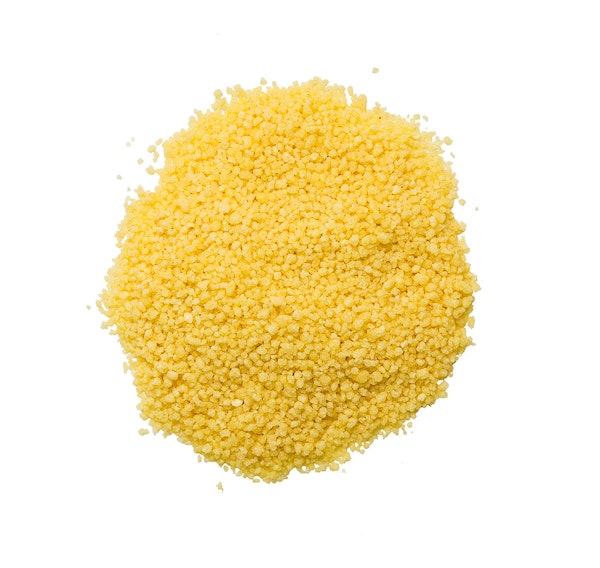
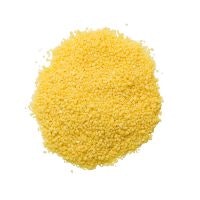
Semolina is a yellow, granular cereal and is produced from the wheat kernel
via a special milling technique. The hardness of the Durum wheat is ideal
for pasta making because it produces a firm product with consistent cooking
temperatures, and is more resistant to overcooking.
The yellowness of the semolina produces pasta with an attractive golden colour, just like San Remo pasta.
How Is Pasta Made?
There are four stages to making and packaging pasta. Let's take a look
now at how each of them work.
Stage 1: Dough Formation
Pasta production consists of mixing the appropriate amounts of Semolina
and water to obtain a dough. If the final product is to be egg pasta or
spinach or vegetable pasta then this is the stage where any additional
ingredients are added. At San Remo, we use all natural ingredients.
Stage 2: Extrusion and Shaping
The dough is then 'extruded' or in other words, 'pushed' through a die
to give the desired dimensions and final shape of the product. The die
contain holes that determine the size and shape of the pasta, for example,
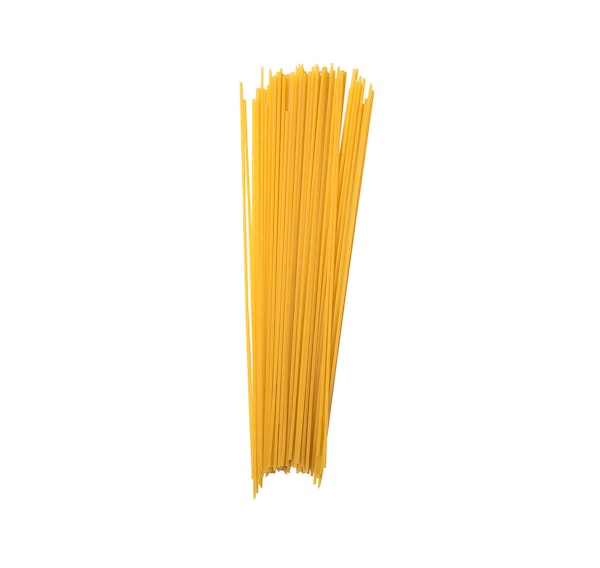
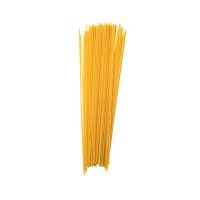
spaghetti is given its characteristic long, solid shape by using a die
with round or oval holes.
Sharp blades that rotate beneath the die cut the extruded pasta as it reaches
the correct length. Short pasta shapes, such as spirals, are moved through the
drying process on vibrating trays and conveyer belts.
Spaghetti and other long pasta shapes are draped over suspended canes
that progressively move through the drying process.
Stage 3: Drying
Extrusion and shaping is followed by the drying phase, where the pasta
passes through very large driers which circulate hot air with controlled
moisture to slowly and evenly dry the pasta.
The drying phase involves careful control of temperature, humidity and
time and the conditions are adjusted depending on the shape and thickness
of the pasta. Drying time may range from 2-12 hours. There are two stages,
pre-drying and the finish-drying stage. Pre-drying is very important to
prevent the pasta pieces from sticking together. Approximately one-third
of the original moisture of the extruded pasta or around 30% of the water
content, is removed. In the 'finishing' stage, the temperature of the
pasta is gradually lowered and the moisture is brought down to about 12%.
Finally, the product is stabilized by cold-air treatment.
The natural moisture content of wheat is up to 12%. The wheat is milled
into semolina, then water is added (up to 30%) to form a dough to create
a shape. The shape is then cut and dried down to 11-12%, the same moisture
content as the wheat that started the whole process started.
Stage 4: Packaging & Distribution
The pasta is then packed into film, sealed at both ends and placed
into cardboard cartons. These cartons are then distributed to supermarkets
where merchandisers place them on shelf, ready to be purchased.
|